The ongoing saga of Harker and the stapler

thatawkwardtinyperson:

falloutphanboyz:

kaijutegu:

kaijutegu:

kaijutegu:

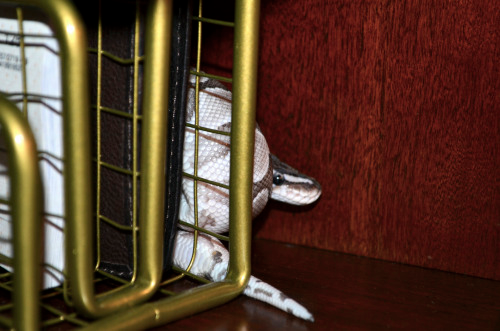
My ball python, Harker, is really scared of this one stapler.

image

Every time he sees it, he balls up.

image

I was grading today and sure enough, the stapler was still scary.

image

However, for the first time, I introduced a second stapler!

He was nervous at first… 

image

But it didn’t take him long to warm up to it.

image

Pretty soon it became his best friend!

image

There was nothing the new stapler couldn’t do!

image

Including protecting him from the other stapler.

image

The moral of the story?

My snake is a weirdo.

Update: Today I took Harker to my office, where he met another stapler.

He was fairly apathetic at first, but eventually they got on pretty well!

This stapler was smaller than either of the others, but one thing was sure: this stapler was definitely not scary!

Am I any closer to understanding my snake’s strange relationship with staplers?

Absolutely not.

UPDATE: it’s 2016 and I’m pleased to announce that he’s FINALLY gotten over his fear of the stapler!

He likes it now!

Tell him I’m proud of him

This post is so pure!

map-is-not-a-real-word:

8ophie:

her name was freddie oversteegen!

Freddie Oversteegen, Dutch resistance fighter who killed Nazis through seduction, dies at 92

The Dutch resistance was widely believed to be a man’s effort in a man’s war. If women were involved, the thinking went, they were likely doing little more than handing out anti-German pamphlets or newspapers.

Yet Freddie Oversteegen and her sister Truus, two years her senior, were rare exceptions — a pair of teenage women who took up arms against Nazi occupiers and Dutch “traitors” on the outskirts of Amsterdam. With Hannie Schaft, a onetime law student with fiery red hair, they sabotaged bridges and rail lines with dynamite, shot Nazis while riding their bikes, and donned disguises to smuggle Jewish children across the country and sometimes out of concentration camps.

In perhaps their most daring act, they seduced their targets in taverns or bars, asked if they wanted to “go for a stroll” in the forest — and “liquidated” them, as Ms. Oversteegen put it, with a pull of the trigger.

“We had to do it,” she told one interviewer. “It was a necessary evil, killing those who betrayed the good people.” When asked how many people she had killed or helped kill, she demurred: “One should not ask a soldier any of that.” […]